
Marine Construction in Miami, FL
Transforming Waterfronts with Precision and Craftsmanship — serving Miami and the surrounding waterfront communities.
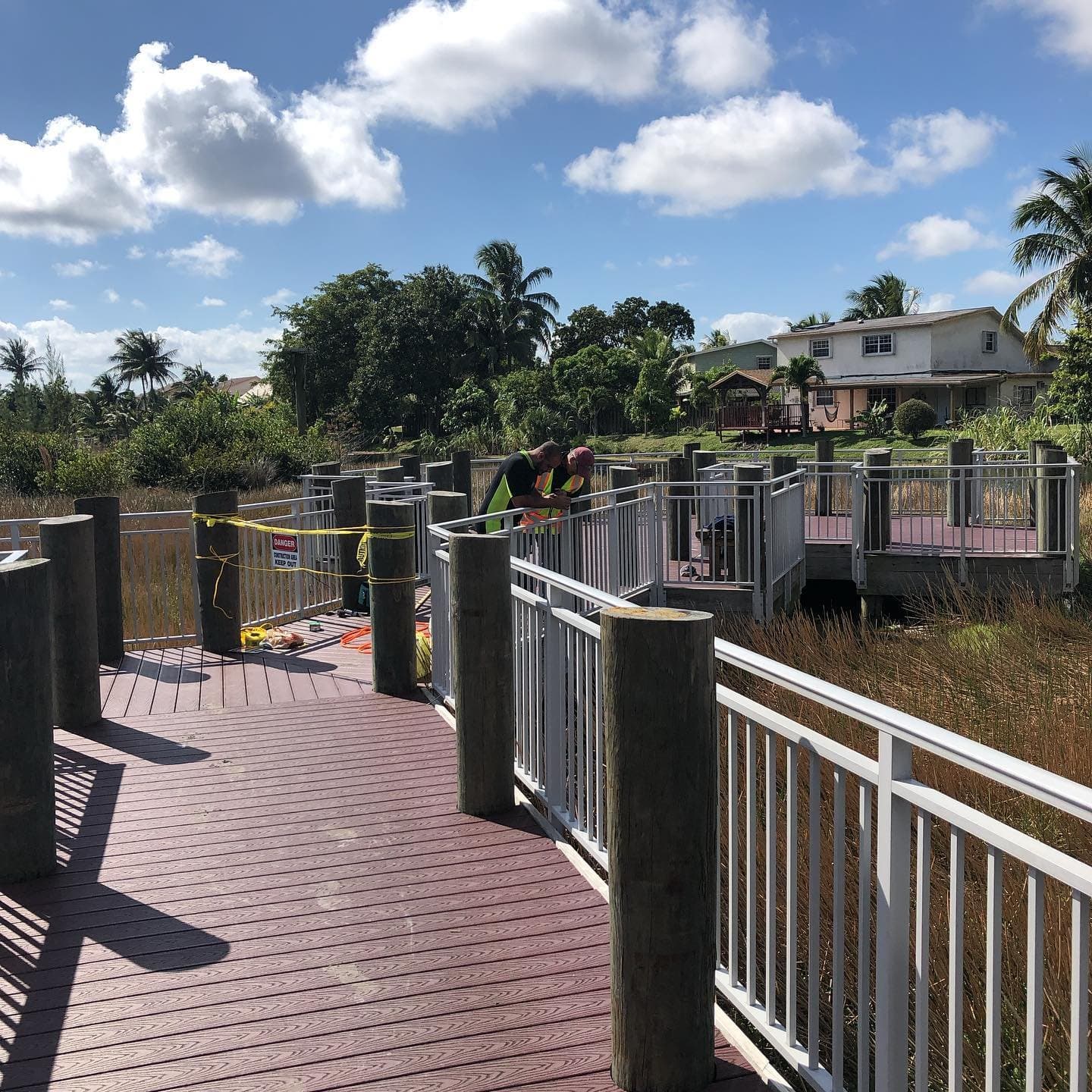
Do I need a permit for marine construction in Miami?
Yes — most in-water work in Miami-Dade, including docks, seawalls, pilings, and boat lifts, requires a Class I Permit from Miami-Dade DERM before work begins, and projects can also fall under FDEP, SFWMD, or U.S. Army Corps of Engineers review depending on the waterway. Watson Marine, family-owned since 2014, works across Miami-Dade and Broward and handles this permitting layer as part of every project.
What makes marine construction different in Miami compared to other cities?
Miami-Dade County sits entirely inside Florida's High-Velocity Hurricane Zone (HVHZ), the strictest wind-load construction standard in the state, so marine structures here need engineering and materials rated for higher design wind speeds than most of the country. Add Miami's king tide season each fall, when tidal water regularly reaches existing seawall caps, and waterfront construction has to account for both wind and water exposure from day one.
What marine construction looks like in Miami
Miami's king tide season, roughly September through November, regularly pushes tidal water to or above the caps of older seawalls, and Florida's sea level has risen about 8 inches since 1950, with projections of another 10-17 inches by 2040 compared to 2000.
Miami-Dade's network of primary canals, including the C-6 Miami Canal and C-8 Biscayne Canal managed by the South Florida Water Management District, drains into Biscayne Bay and forms the residential waterway system that gives canal-front homes in neighborhoods like Shorecrest direct boat access.
All of Miami-Dade County falls inside Florida's High-Velocity Hurricane Zone (HVHZ), which applies stricter wind-load and product-approval rules than standard Florida building code.
Nearly all in-water marine work in Miami-Dade requires a Class I Permit from Miami-Dade DERM, with additional review possible from FDEP, SFWMD, or the Army Corps of Engineers.
Miami's king tide season (September-November) pushes tidal water to or above many existing seawall caps, a factor DERM and engineers weigh into current marine construction design.
We regularly work in Coconut Grove, Brickell, Morningside and Shorecrest, and coordinate permitting with Miami-Dade County's Department of Environmental Resources Management (DERM) — a Class I Permit is required for work in tidal waters and coastal wetlands countywide; FDEP, the South Florida Water Management District, and the U.S. Army Corps of Engineers may also have jurisdiction depending on the project.
For the complete breakdown of our marine construction process, materials, and options, see the full Marine Construction page. Want to explore other cities we serve? Visit Areas Served.
Marine Construction in Miami — Frequently Asked Questions
It typically starts with a site assessment of the waterway and structure, followed by a permit application through Miami-Dade DERM's Class I process (with FDEP or Army Corps review if applicable), then construction once approvals are issued.
Marine Construction in Nearby Cities
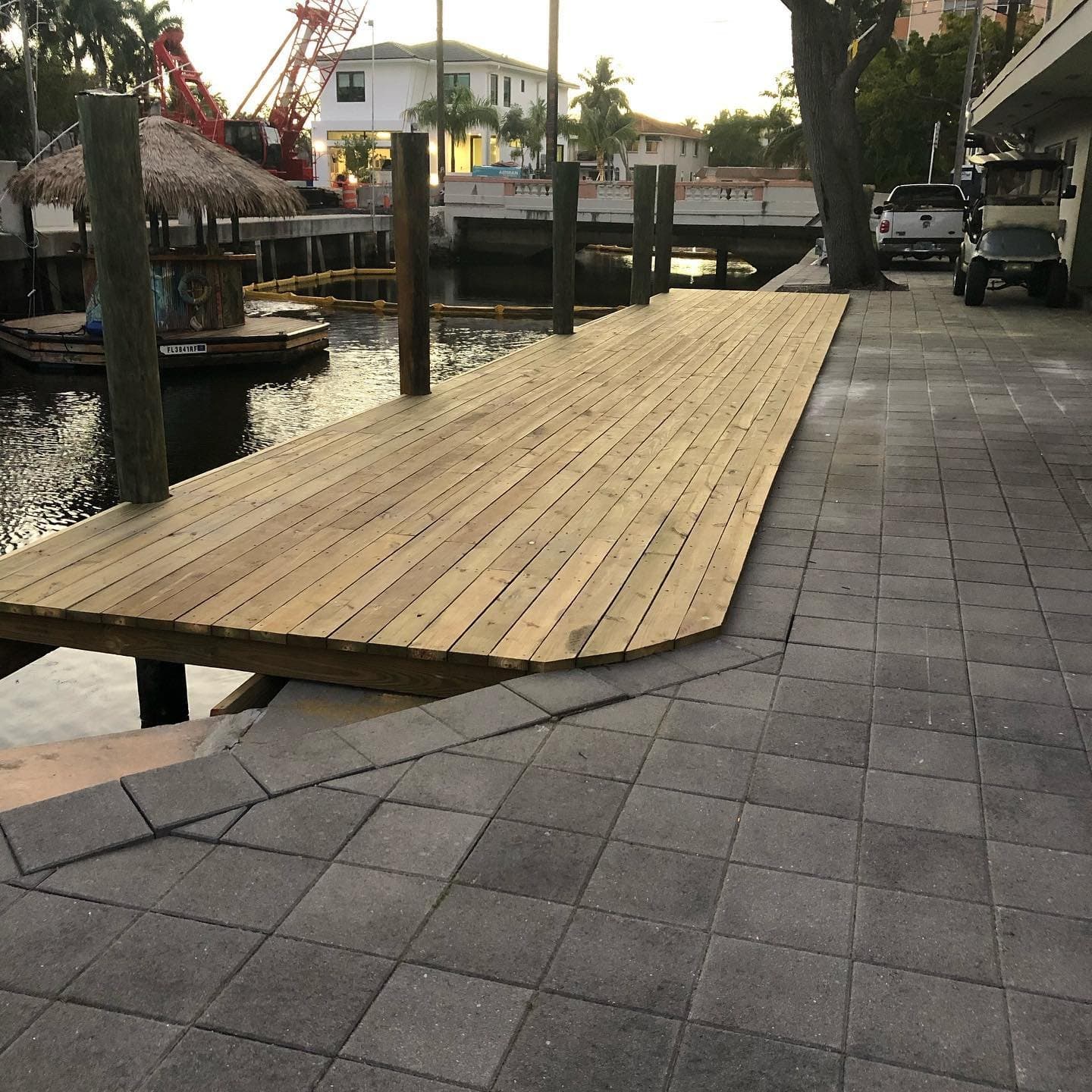
Ready to build on the water in Miami?
Tell us about your Miami property and what you need built — we'll follow up to schedule a site visit and put together a quote.